

Skip to content
  • Projects
  • Publications
  • News
  • About us
    • Our team
    • PhD students
    • Eriksholm’s timeline
    • History of hearing aids
    • Partnerships
    • Contact us
  • Projects
  • Publications
  • News
  • About us
    • Our team
    • PhD students
    • Eriksholm’s timeline
    • History of hearing aids
    • Partnerships
    • Contact us
  • Projects
  • Publications
  • News
  • About us
    • Our team
    • PhD students
    • Eriksholm’s timeline
    • History of hearing aids
    • Partnerships
    • Contact us
  • Projects
  • Publications
  • News
  • About us
    • Our team
    • PhD students
    • Eriksholm’s timeline
    • History of hearing aids
    • Partnerships
    • Contact us
Back

Audiological User Pain Points

Lena Havtorn

Research Manager

Eriksholm Research Centre

Claus Nielsen

Senior Research Operations Manager

Eriksholm Research Centre

Niels Pontoppidan

Principal Scientist

Eriksholm Research Centre

Audiological User Pain Points

Introduction

When asking hearing aid users about their challenges, the category hearing in noise most often top the list. However, the hearing in noise category covers many different situations making it difficult to identify what the actual challenge is, and consequently also identifying how it could be improved.

In hearing rehabilitation, the Client Oriented Scale of Improvement (COSI) is a tool where hearing aid users identify the situations they wish to improve upon with hearing aids, and subsequently the situations for which they rate their perceived improvement. While COSI gives a more detailed explanation of the situation in the users’ own words, it also lacks the detailed acoustic information about the situation. With this project we wish to better understand the acoustic circumstances around user pain points and individual COSI situations from combining it with data logging from hearing aids.

Aims

We want to explore the benefits from combining hearing aids that log information about the acoustic environment with mobile app where hearing aid users identify challenging situations and rate their hearing. We hope that our analysis will unlock a new set of detailed situations which our future hearing research can address.

Methodology

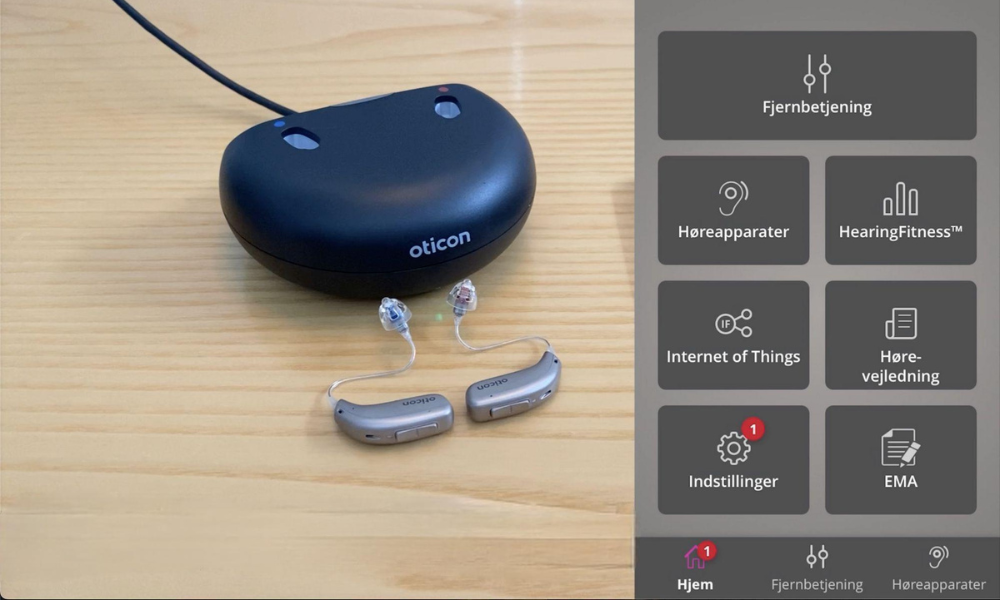
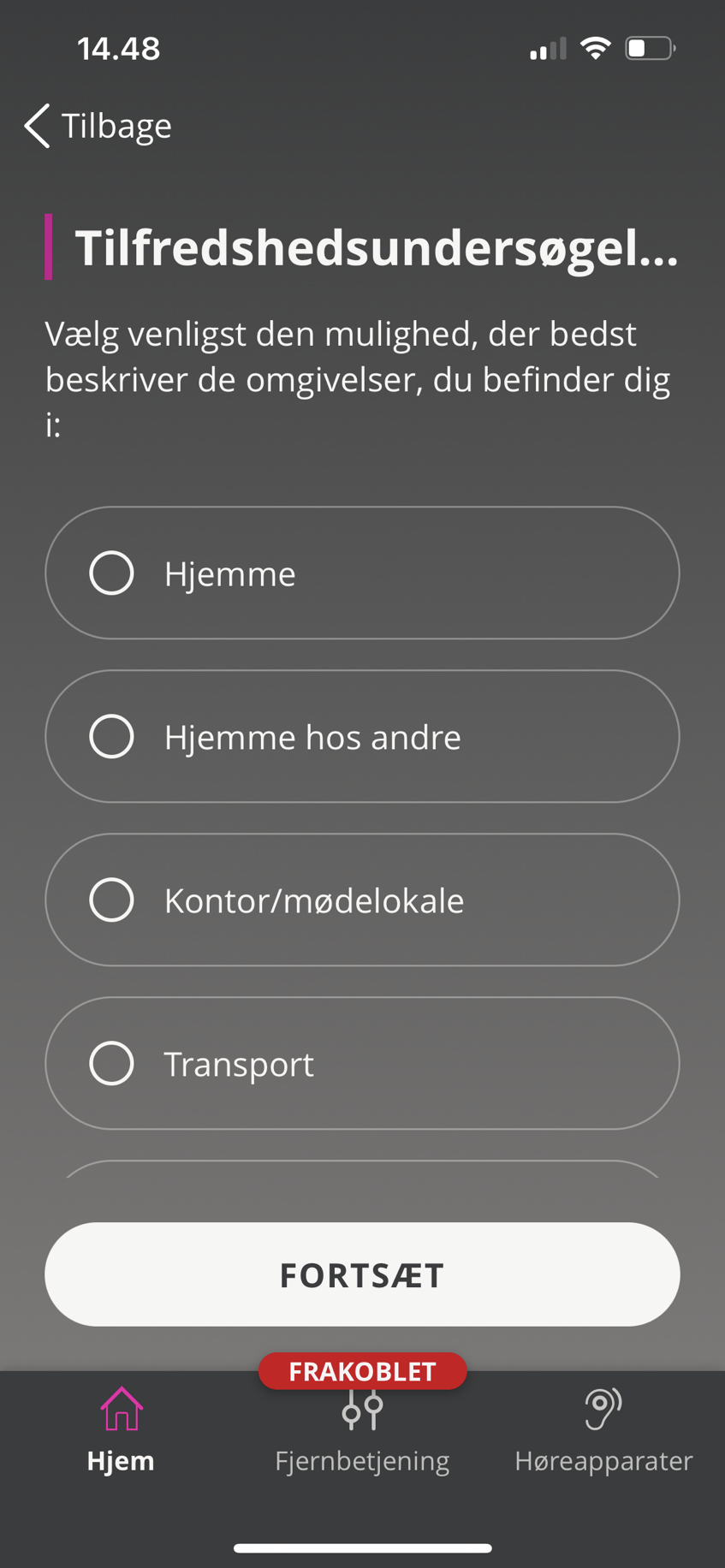
Test persons will get hearing aids with a personalized fitting and a prototype app on their phone where they can mark and rate situations that they find challenging while they experience them or shortly after. During fitting, test persons will formulate their COSI situations, and receive instructions on how to report back on their COSI situations with their app, and how they report back on the other challenging situations.

The test persons evaluate their COSI situations momentarily in the field with the app
App

Team

Lena Havtorn

Research Manager

Eriksholm Research Centre

Claus Nielsen

Senior Research Operations Manager

Eriksholm Research Centre

Niels Pontoppidan

Principal Scientist

Eriksholm Research Centre

Anna Josefine Munch Sørensen

Scientist

Eriksholm Research Centre

Soffi Skovlund Jensen

Senior Research Audiologist

Eriksholm Research Centre

Tiberiu-ioan Szatmari

PhD Student

Oticon A/S

View all

You may also be interested in

Loading...
Hearing aid preferences for noise reduction and high frequency gain
CURRENT
Hearing aid preferences for noise reduction and high frequency gain
4409

Personalised Audiology

A key challenge for audiologists and hearing aid users during fine-tuning is to find the right balan...
A key challenge for audiologists and hearing aid users during fine-tuning is to find the…
Preferred settings in hearing devices
CURRENT
Preferred settings in hearing devices
4459

Personalised Audiology

Modern hearing aids contain many advanced signal processing features to obtain the best possible end...
Modern hearing aids contain many advanced signal processing features to obtain the best possible end…
noise reduction, timbre, and compressive settings
FINALIZED
Understanding the impact of noise reduction, timbre, and compressive settings in hearing aids in the laboratory and simulated VR environments
4409,4552

Personalised Audiology

While hearing aid users often have their devices fine-tuned in the clinic with prescribed settings, ...
While hearing aid users often have their devices fine-tuned in the clinic with prescribed settings,…

You may also be interested in

Hearing aid preferences for noise reduction and high frequency gain
CURRENT
Hearing aid preferences for noise reduction and high frequency gain
4409

Personalised Audiology

A key challenge for audiologists and hearing aid users during fine-tuning is to find the right balan...
A key challenge for audiologists and hearing aid users during fine-tuning is to find the…
Preferred settings in hearing devices
CURRENT
Preferred settings in hearing devices
4459

Personalised Audiology

Modern hearing aids contain many advanced signal processing features to obtain the best possible end...
Modern hearing aids contain many advanced signal processing features to obtain the best possible end…
noise reduction, timbre, and compressive settings
FINALIZED
Understanding the impact of noise reduction, timbre, and compressive settings in hearing aids in the laboratory and simulated VR environments
4409,4552

Personalised Audiology

While hearing aid users often have their devices fine-tuned in the clinic with prescribed settings, ...
While hearing aid users often have their devices fine-tuned in the clinic with prescribed settings,…

People are our most
valuable source of
insights

Facebook

Instagram

LinkedIn

Youtube

  • Eriksholm Research Centre
  • Rørtangvej 20
  • DK-3070 Snekkersten
  • Denmark
We are a part of Oticon, a world leader in hearing care. We share the same philosophy that people are our main source of insights
Bliv testperson
  • +45 48 29 89 00
  • mail@eriksholm.com
  • Cookie policy
  • Disclaimer

© 2025 Eriksholm – Designed by Aveo web&marketing

Manage consent to cookies
We use cookies to optimize our website and our service.
Functional Always active
The technical storage or access is strictly necessary for the legitimate purpose of enabling the use of a specific service expressly requested by the subscriber or user, or solely for the purpose of transmitting a communication via an electronic communication network.
Preferences
The technical storage or access is necessary for the legitimate purpose of storing preferences that are not requested by the subscriber or user.
Statistics
The technical storage or access used exclusively for statistical purposes. The technical storage or access that is used exclusively for anonymous statistical purposes. Without a subpoena, voluntary compliance on the part of your Internet Service Provider, or additional records from a third party, information stored or retrieved for this purpose alone cannot usually be used to identify you.
Marketing
The technical storage or access is necessary to create user profiles for the purpose of sending advertisements or to track the user on a website or across multiple websites for similar marketing purposes.
  • Manage options
  • Manage services
  • Manage {vendor_count} vendors
  • Read more about these purposes
Preferences
  • {title}
  • {title}
  • {title}