Skip to content
  • Projects
  • Publications
  • News
  • About us
    • Our team
    • PhD students
    • Eriksholm’s timeline
    • History of hearing aids
    • Partnerships
    • Contact us
  • Projects
  • Publications
  • News
  • About us
    • Our team
    • PhD students
    • Eriksholm’s timeline
    • History of hearing aids
    • Partnerships
    • Contact us
  • Projects
  • Publications
  • News
  • About us
    • Our team
    • PhD students
    • Eriksholm’s timeline
    • History of hearing aids
    • Partnerships
    • Contact us
  • Projects
  • Publications
  • News
  • About us
    • Our team
    • PhD students
    • Eriksholm’s timeline
    • History of hearing aids
    • Partnerships
    • Contact us
Back

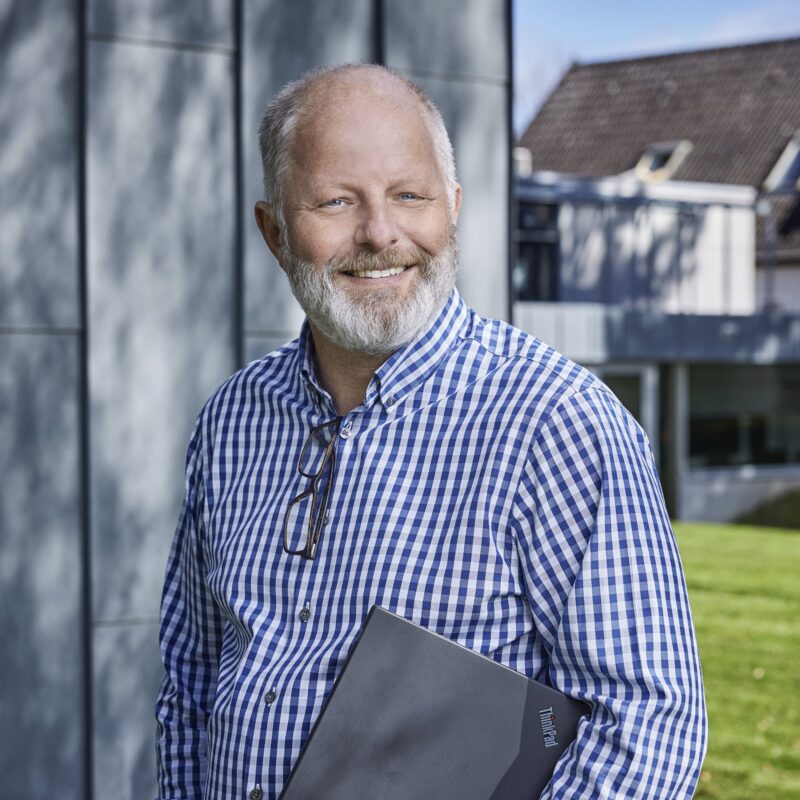
Claus Nielsen

Senior Research Operations Manager

“I hope the house is vibrant and that we have many ongoing projects that can make a difference for people with hearing loss. I also hope we grow our sphere of influence within audiology. I will again take part in a research project where we hope to learn much more about the users and how they use our products.”

What do you do at Eriksholm?

I am a Research Operations Manager and Senior Research Audiologist. The primary aspect of my work lies within operations. That means I am responsible for facility management and financial supervision to assist our Senior Director.

What do you do at Eriksholm?

I am a Research Operations Manager and Senior Research Audiologist. The primary aspect of my work lies within operations. That means I am responsible for facility management and financial supervision to assist our Senior Director.

And you have worked here for how long now?

I applied more than 35 years ago. I applied because I wanted to work with people with hearing impairment in a clinical environment. At the time I was working in the public hearing system, but gradually became fed up with the limited amount of time we had to work with the people who came into our clinic. I wanted to work in a place where I had the time to talk to people and understand their predicament; at the time, that place was Eriksholm Research Centre.

And you have worked here for how long now?

I applied more than 35 years ago. I applied because I wanted to work with people with hearing impairment in a clinical environment. At the time I was working in the public hearing system, but gradually became fed up with the limited amount of time we had to work with the people who came into our clinic. I wanted to work in a place where I had the time to talk to people and understand their predicament; at the time, that place was Eriksholm Research Centre.

What are some of the projects you have been involved with at Eriksholm Research Centre?

I have been involved in many, many research projects, covering everything from acoustic transfer functions of in-the-ear instruments to behavioral science projects such as client-journey projects, when people realize their hearing impairment, and we work with them to map their journey to living well with their hearing loss. I have also initiated a number of projects and ideas, for example what we today know as occlusion problems. Occlusion problems describe how people perceive the sound of their own voice when they are wearing hearing aids. That was something that Eriksholm and Oticon later reaped a lot of praise for; we understood occlusion problems and made a great effort to tackle them. On top of all of that, I think it is fair to say you can refer to me as the company expert on hearing aid history, and the history of both the company and the Demant family. I run the Eriksholm Collection, our in-house museum, and can probably catalogue the past 100 years of hearing aids more or less by heart.

What are some of the projects you have been involved with at Eriksholm Research Centre?

I have been involved in many, many research projects, covering everything from acoustic transfer functions of in-the-ear instruments to behavioral science projects such as client-journey projects, when people realize their hearing impairment, and we work with them to map their journey to living well with their hearing loss. I have also initiated a number of projects and ideas, for example what we today know as occlusion problems. Occlusion problems describe how people perceive the sound of their own voice when they are wearing hearing aids. That was something that Eriksholm and Oticon later reaped a lot of praise for; we understood occlusion problems and made a great effort to tackle them. On top of all of that, I think it is fair to say you can refer to me as the company expert on hearing aid history, and the history of both the company and the Demant family. I run the Eriksholm Collection, our in-house museum, and can probably catalogue the past 100 years of hearing aids more or less by heart.

What do you like the most about working at Eriksholm Research Centre?

I would say what I like the most about working here is the freedom to operate that I am afforded. I am not a big fan of micro-management, and so I think it is really nice that I get to own my work and do it in a way that I feel is an effective use of my time and resources.

What do you like the most about working at Eriksholm Research Centre?

I would say what I like the most about working here is the freedom to operate that I am afforded. I am not a big fan of micro-management, and so I think it is really nice that I get to own my work and do it in a way that I feel is an effective use of my time and resources.

What are the three most important values in your life?

Trust – This comes back to me having the freedom to operate within my job. That freedom is the result of mutual trust between yourself and your manager, and it is something I value very much. For the same reason I aim at offering my employees the trust and independence they need to do their jobs comfortably.

Respect – My definition of respect in this case may differ a little from others’ definition of it. What I mean is I respect others by virtue of who they are. I do not judge people based on their religion, not their title, not where they are from, or what they like. In my eyes, the best thing we can do, is respect everyone equally.

Friendship – Throughout the past three or four years I have learned how important it is to have good friends you can trust. Friends you can be together with without having to say much, friends who know you well enough to ask “what is wrong?

What are the three most important values in your life?

Trust – This comes back to me having the freedom to operate within my job. That freedom is the result of mutual trust between yourself and your manager, and it is something I value very much. For the same reason I aim at offering my employees the trust and independence they need to do their jobs comfortably.

Respect – My definition of respect in this case may differ a little from others’ definition of it. What I mean is I respect others by virtue of who they are. I do not judge people based on their religion, not their title, not where they are from, or what they like. In my eyes, the best thing we can do, is respect everyone equally.

Friendship – Throughout the past three or four years I have learned how important it is to have good friends you can trust. Friends you can be together with without having to say much, friends who know you well enough to ask “what is wrong?

What do you hope Eriksholm will look like in five years?

I hope the house is vibrant and that we have many ongoing projects that can make a difference for people with hearing loss. I also hope we grow our sphere of influence within audiology. I will again take part in a research project where we hope to learn much more about the users and how they use our products.

What do you hope Eriksholm will look like in five years?

I hope the house is vibrant and that we have many ongoing projects that can make a difference for people with hearing loss. I also hope we grow our sphere of influence within audiology. I will again take part in a research project where we hope to learn much more about the users and how they use our products.

What do you do in your spare time?

Spending time with my family, especially my grandchildren, gives me joy. “I also enjoy, for one, geocaching, otherwise referred to as “GPS treasure hunting”. I have practiced geocaching for the past twelve years both in Denmark and around the world. On occasion, I have had the opportunity to travel just for geocaching, which is always an amazing experience, and I get to meet a lot of crazy people like myself, who enjoy this global treasure hunt. I also like to ride my old vintage motorcycle whenever the schedule and weather permits. I also love cooking; originally, I actually wanted to work as a chef, but – fortunately for me, as I love my job now – I did not pursue that dream.

What do you do in your spare time?

Spending time with my family, especially my grandchildren, gives me joy. “I also enjoy, for one, geocaching, otherwise referred to as “GPS treasure hunting”. I have practiced geocaching for the past twelve years both in Denmark and around the world. On occasion, I have had the opportunity to travel just for geocaching, which is always an amazing experience, and I get to meet a lot of crazy people like myself, who enjoy this global treasure hunt. I also like to ride my old vintage motorcycle whenever the schedule and weather permits. I also love cooking; originally, I actually wanted to work as a chef, but – fortunately for me, as I love my job now – I did not pursue that dream.

Publications

To see related publications, please follow this link and type in the scientist’s name in the free text search field. The result shows publications by this scientist during collaboration with Eriksholm Research Centre and/or with relevance to current work.

Loading...
Paulsen, R. R., Larsen, R., Laugesen, S., Nielsen, C., Ersbøll, B. K. (2002). Building and Testing a Statistical Shape Model of the Human Ear Canal. Medical Image Computing and Computer-Assisted Intervention, MICCAI 2002. Lecture Notes in Computer Science. Volume 2489, p. 373-380, 2002.
Jensen, N.S., Nielsen, C. (2005). Auditory Ecology in a group of experienced hearing-aid users – can knowledge about hearing-aid users’ auditory ecology improve their rehabilitation? [Conference Proceedings]. the 21st Danavox symposium, p. 235-259.
Jensen, N.S., Maas, P., Nielsen, C., Laugesen, S., Flynn, M. (2006). A first attempt at a comprehensive Own Voice Qualities, OVQ, questionnaire [Poster]. International Hearing Aid Research Conference, IHCON, Lake Tahoe, CA, USA.
Laugesen, S., Jensen, N.S., Maas, P., Nielsen, C. (2007). Self-perceived own-voice level and sound quality in hearing-aid users. Hearing review, 15(1), p. 28,32-35.
Laugesen, S., Jensen, N.S., Maas, P., Nielsen, C. (2008). Variations in ‘adequate’ own-voice level used by speakers and preferred by listeners when communicating across a distance. In: Dau, T., Buchholz, J.M., Harte, J., Christiansen, T.U. (Eds.) Auditory Signal Processing in Hearing-Impaired Listeners [Conference Proceedings]. the First International Symposium on Audiological and Auditory Research, ISAAR, p. 541-550.
Jensen, N.S., Laugesen, S., Maas, P., Nielsen, C., Cárdenas, M.L.K.G., Rysager, S.M. (2008). A large-scale substantiation of own-voice issues in hearing-aid users, part II: Reducing occlusion problems is still important [Poster]. International Hearing Aid Research Conference, IHCON. Lake Tahoe, California.
Knudsen, L.V., Öberg, M., Nielsen, C., Naylor, G., Kramer, S.E. (2010). Factors Influencing Help Seeking, Hearing Aid Uptake, Hearing Aid Use and Satisfaction With Hearing Aids: A Review of the Literature. Trends in amplification, 14(3), p. 127-154.
Knudsen, L.V., Naylor, G., Nielsen, C., Kramer, S.E., Öberg, M. (2010). Factors which influence help seeking hearing aid uptake, use and satisfaction – what do we know? [Poster]. Adult Hearing Screening International Conference, AHS. Como, Italy.
Nielsen, C., Darkner, S. (2011). The cartilage bone junction and its implication for deep canal hearing instrument fittings. Hearing Journal, 64(3), pp. 35,36,40,42
Laugesen, S., Jensen, N. S., Maas, P., Nielsen, C. (2011). Own Voice Qualities, OVQ, in Hearing-Aid Users. There is more than just occlusion. International journal of audiology, 50(4), p. 226-236.
Knudsen, L. V., Laplante-Lévesque, A., Jones, L., Preminger, J. E., Nielsen, C. V., Lunner, T., Hickson, L., Naylor, G., & Kramer, S. E. (2011). Conducting qualitative research in audiology: A tutorial. International Journal of Audiology, 51(2), 83–92. https://doi.org/10.3109/14992027.2011.606283
Jensen, L.D., Laplante-Lévesque, A., Nielsen, C., Dawes, P. (2012). Hearing it from both sides: Identifying and comparing hearing aid users’ and audiologists’ perspectives on optimal hearing aid use [Poster]. 2nd Global Congress for Qualitative Health Research, Milan, Italy.
Laplante-Lévesque, A., Jensen, L. D., Dawes, P., Nielsen, C. (2013). Optimal Hearing Aid Use: Focus Groups With Hearing Aid Clients and Audiologists. Ear and Hearing, 34(2), pp. 193-202.
Kramer, S. E., Knudsen, L. V., Öberg, M., Nielsen, C., Naylor, G. (2013). Factors Influencing Help Seeking, Hearing Aid Uptake, Hearing Aid Use and Satisfaction With Hearing Aids: A Review of the Literature. Trends in Amplification. 2010;14(3):127-154. doi:10.1177/1084713810385712
Knudsen, L. V., Nielsen, C., Kramer, S. E., Jones, L., Laplante-Lévesque, A. (2013). Client labour: The participation of people with hearing impairment in their hearing help-seeking and rehabilitation. Journal of the American Academy of Audiology, 24(3), p. 192-204.
Laplante-Lévesque, A., Jensen, L. D., Oxenbøll, M., Nielsen, C. (2014). Health behaviour change in adults with hearing impairments [Poster]. World Congress of Audiology, Brisbane, Australia, May 5-7
Frederick, M., Saunders, G., Silverman, S., Laplante-Lévesque, A., Jensen, L.D., Nielsen, C. (2015). Health behavior change in adults with hearing impairment [Poster]. American Auditory Society Meeting, Scottsdale, AZ, USA
Saunders, G. H., Frederick, M. T., Silverman, S. P. C., Nielsen, C. V., & Laplante-Lévesque, A. (2016). Description of adults seeking hearing help for the first time according to two health behavior change approaches: transtheoretical model (Stages of change) and Health Belief model. Ear And Hearing, 37(3), 324–333. https://doi.org/10.1097/aud.0000000000000268
Saunders, G.H., Frederick, M., Nielsen, C., Laplante-Lévesque, A., Silverman, S.P. (2016). A novel intervention to promote help seeking for hearing loss [Conference Presentation]. the International Hearing Aid Research Conference, IHCON, Lake Tahoe, California, USA, and at the Gerontological Society of America 2016 Annual Scientific Meeting, New Orleans Louisiana, November 16-20.
Saunders, G. H., Frederick, M. T., Silverman, S. C., Nielsen, C., & Laplante-Lévesque, A. (2017). Development and pilot evaluation of a novel Theory-Based intervention to encourage Help-Seeking for Adult Hearing Loss. Journal of the American Academy of Audiology, 28(10), 920–931. https://doi.org/10.3766/jaaa.16129
Pontoppidan, N.H., Xi, L., Bramsløw, L., Johansen, B., Nielsen, C., Hafez, A., Pedersen, M.K. (2017). Data-Driven Hearing Care with Time Stamped Data-Logging [Conference Proceedings]. of ISAAR 2017, Nyborg, Denmark, 23-25 Aug 2017.
Nielsen, C., Henriksen, T. B. (2021). 40 years of consumer comments: Making hearing aid feedback and occlusion past history. Hearing Review.
Nielsen, C., Henriksen, T. B. (2021).The good life: What 40 years of consumer comments suggests about hearing aid use. Hearing Review.

Projects

Audiological User Pain Points
CURRENT
Audiological User Pain Points
4923,4860,4409

Personalised Audiology

When asking hearing aid users about their challenges, the category hearing in noise most often top t...
When asking hearing aid users about their challenges, the category hearing in noise most often…
Advancing understanding and treatment of hearing difficulties in a currently underserved population (UPTREAT)
Current
Advancing understanding and treatment of hearing difficulties in a currently underserved population (UPTREAT).
3008,1037,4341,18378

Personalised Audiology

A substantial proportion of people seeking help from hearing care professionals due to hearing diffi...
A substantial proportion of people seeking help from hearing care professionals due to hearing difficulties…
Mapping the curve of communication breakdowns during conversations in noise
Current
Mapping the curve of communication breakdowns during conversations in noise
4415,6493,18220,18222

Personalised Audiology

This project aims to determine the curve of communication breakdowns for hearing aid wearers and the...
This project aims to determine the curve of communication breakdowns for hearing aid wearers and…
Forming and Following Auditory Objects
Current
Forming and Following Auditory Objects
18176,1037,18178

Cognitive Hearing Science

This project investigates how the brain represents these auditory objects and how this process is af...
This project investigates how the brain represents these auditory objects and how this process is…
Audiological User Pain Points
CURRENT
Audiological User Pain Points
4923,4860,4409

Personalised Audiology

When asking hearing aid users about their challenges, the category hearing in noise most often top t...
When asking hearing aid users about their challenges, the category hearing in noise most often…

People are our most
valuable source of
insights

Facebook

Instagram

LinkedIn

Youtube

  • Eriksholm Research Centre
  • Rørtangvej 20
  • DK-3070 Snekkersten
  • Denmark
We are a part of Oticon, a world leader in hearing care. We share the same philosophy that people are our main source of insights
Bliv testperson
  • +45 48 29 89 00
  • mail@eriksholm.com
  • Cookie policy
  • Disclaimer

© 2025 Eriksholm – Designed by Aveo web&marketing

Manage consent to cookies
We use cookies to optimize our website and our service.
Functional Always active
The technical storage or access is strictly necessary for the legitimate purpose of enabling the use of a specific service expressly requested by the subscriber or user, or solely for the purpose of transmitting a communication via an electronic communication network.
Preferences
The technical storage or access is necessary for the legitimate purpose of storing preferences that are not requested by the subscriber or user.
Statistics
The technical storage or access used exclusively for statistical purposes. The technical storage or access that is used exclusively for anonymous statistical purposes. Without a subpoena, voluntary compliance on the part of your Internet Service Provider, or additional records from a third party, information stored or retrieved for this purpose alone cannot usually be used to identify you.
Marketing
The technical storage or access is necessary to create user profiles for the purpose of sending advertisements or to track the user on a website or across multiple websites for similar marketing purposes.
  • Manage options
  • Manage services
  • Manage {vendor_count} vendors
  • Read more about these purposes
Preferences
  • {title}
  • {title}
  • {title}